Showing posts with label modules. Show all posts

Sunday, 23 December 2018

JS Modules: Genomics

Much as I did with my subjects last year, I'm going to do a quick recap of each of my JS modules so that I can remember where I learned things. It's probably not going to be very accessible to non-bio people because it's just a record-keeping post rather than an explanatory one, I'm afraid. Number two is Genomics, which involved 30 lectures over 5 weeks. It was divided into three sections, two lecture series and one computational:

Systems Biology

To be honest, I still couldn't tell you exactly what systems biology is and I don't think it can always be differentiated from reductionism, but basically I think it's looking at a complex biological system from the top down and modelling it quantitatively over time to understand the connections between its components, whereas reductionism would be understanding each individual component in turn and building up from there. This was all taught by Frank Wellmer and was cool. We covered:


  • Systems biology vs reductionism
  • Genomics & genome sequencing techniques (Agarose gel electrophoresis, PCR, Sanger dideoxy chain termination, next-gen, Oxford Nanopore)
  • Structural genomics: Identifying genes, transcribed regions, and regulatory regions in a genome
  • Comparative genomics: comparing genomes between individuals, populations, species and higher taxa
  • Functional genomics: identifying functions of genes on a genome-wide scale.
  • Transcriptomics: measuring expression of genes using techniques such as RNA-seq and microarrays to see for example whether a given gene is expressed differentially in different tissues, or when a cell is infected by a virus vs not.
  • Proteomics: studying the full protein complement of an organism, techniques to do this such as mass-spec, SDS-PAGE gels and Mud-PIT and how they work, and why proteomics has fallen behind genomics
  • Networks & gene regulation + techniques to study that (ChIP-seq)
  • Genomics/transcriptomics in medicine e.g. breast cancer prognostics using differentially expressed marker genes as indicators of metastasis likelihood
A big takeaway from this was that the  human genome sequence, as with all genome sequences, simply gives us a list of ATGCTAGCTAGCTCs. The much harder task is to annotate that to figure out where the genes actually are (only 2% of the genome is coding DNA, though not all genes are coding - and how do you define a gene anyway?) and then what they do and how they're related to each other.


Molecular Genetics Techniques

This was taught in part by Frank and in part by Ursula Bond. With Frank, we covered the process of molecular cloning, including the enzymes involved and a bit on how they work (restriction endonucleases, ligases, recombinases, DNA polymerase for PCR, topoisomerases, kinases, phosphatases, DNA methylases), choosing a good cloning vector, ligating the vector with the insert (and avoiding vector religations using either double digestion or dephosphorylating the end of the vector, or using blue/white screening), transforming the host (usually bacteria - done with heat shock or electroporation), then after propagation isolating the plasmid using alkaline lysis. This was a very handy course because we physically did a lot of these things in our Molecular Genetics lab, so it was nice to cover it twice from different perspectives and helpful in the exam. 

Funnily enough, even though Frank warned us this lecture series would be dry, I found it very interesting because he took a really inquiry-based approach so we could figure stuff out on the fly in class. I was proud that I figured out why restriction enzymes recognise palindromic sequences (because they have to make double-stranded breaks so recognise the same sequence on both strands, and then we learned that that's because they're usually homodimers). It felt like we were being treated as 'real trainee scientists' because he'd go through how to troubleshoot a restriction digest not working, or show an example of an origin of replication and then ask how we could increase copy number. I loved the problem-solving approach.

Bond's section was about producing recombinant proteins such as insulin in different hosts including bacteria, yeast, and mammalian cell culture. It was all about the choices you have to make when you want to pump out a protein: which host, promoter, expression vector, selectable markers, affinity tags for purification, secretion pathway, etc., do you use. She also gave a lecture on how to produce monoclonal antibodies and their therapeutic uses. 

While I didn't focus on her material for the exam because the slides weren't very informative and there was a fair bit of information to memorise such as antibody names, it was actually quite an interesting course and I loved the strategy aspect of it and the modular way you can build up an expression system. 

It was much more engineering than science, and even covered the whole workflow from designing the expression vector through scaling up production through product formulation to trials, marketing and sales. 

I loved the bits about controlling the expression of the recombinant protein - for example, if you're using yeast, you can attach a promoter behind the gene you want to express that is suppressed by glucose, so that once the yeast have grown a ton and used up all the glucose, they'll suddenly switch on the gene and produce loads of the product at once. It's a choice - you might alternatively want a constitutive promoter that'll just produce the protein steadily. 

An example of the modular combinations you can do so you can both positively and negatively control expression is:
 
  • have gene to make T7 virus RNA polymerase, put under the control of the lac promoter so that it's IPTG-inducible
  • have plasmid carrying lysozyme gene because lysozyme protein inhibits T7 RNA pol, under a rhamnose-repressible promoter
  • have plasmid with the protein you want to express under a promoter bound by T7 RNA pol so that in the presence of IPTG and absence of rhamnose, your protein will be produced.
Bioinformatics

This was the computational third and was not at all what I'd been expecting. Honestly I thought I'd know most of it because I'd spent my summer doing research using bioinformatics, but this had no coding at all whereas that was basically all I'd done. Turns out there are tons of resources I didn't know about that would've been very helpful! We covered PubMed, the literature database (did you know you can link out directly from there to datasets? Gamechanger. Also, it has fancy searching), nucleotide and protein databases, sequence similarity searching and BLAST, pairwise and multiple sequence alignment, personal genomics, and Ensembl and UCSC genome browsers.

Bizarrely, until recently this part was also assessed in the normal exam, meaning you'd have to do things like 'discuss the four types of BLAST program' or 'design an alignment matrix for these two sequences using the pam250 whatever' on paper in an exam, which, oof. Thankfully we did it via a test so we could actually be tested on it in the way we'd use these skills IRL, like the question would say 'Do a BLAST search to find out X' and we'd do that. I got 84% on the test which is decent.


JS Modules: Evolutionary Genetics

Much as I did with my subjects last year, I'm going to do a quick recap of each of my JS modules so that I can remember where I learned things. It's probably not going to be very accessible to non-bio people because it's just a record-keeping post rather than an explanatory one, I'm afraid. I'm starting with Evolutionary Genetics, which involved 28 lectures over 5 weeks. It was divided into three sections:

Aoife McLysaght: Molecular & Genome Evolution


  • Molecular vs morphological data
  • Models of nucleotide substitution (Jukes-Cantor one-parameter, Kimura's two-parameter)
  • Selectionist v neutral/mutationist theories
  • Genetic drift & neutral theory
  • The molecular clock (and things that perturb it) & functional constraint
  • Measuring selecion via Ka/Ks
  • Phylogenetics and its applications
  • Exon/gene/segmental/chromosome/genome duplication (polyploidy)
  • Orthology vs paralogy
  • Patterns in the genome: GC bias and codon usage bias
  • Tree of Life
  • Concerted evolution via unequal crossing over and gene conversion
  • Transposable Elements and their effects across domains of life e.g. hybrid dysgenesis in Drosophila

I liked this lecture series in general. I particularly enjoyed the bits on gene duplication, especially when I studied it in the textbook and read about cool things like subfunctionalisation allowing escape from adaptive conflict and avoiding segregational load caused by heterozygote advantage. A lot of it wasn't new to me but it usually went into significantly more detail than I'd seen before. I struggled with gene conversion because I don't actually understand some of the basics like meiosis as it turns out, but after watching some videos on it to understand the physical process I think I've mostly figured gene conversion out.

I really liked the empirical focus in this lecture series - we usually learned about things via the seminal experiments in the field and then went from there. A lot of my courses this year were like this, which was great.

Lecture series 2: Mutation

I am honestly not certain what this covered as I didn't go over it for the exam or write out the last two lectures on it, but roughly it was:

  • Mutation rates
  • Lesions vs mutations
  • Types of mutation e.g. base change, indel, large-scale chromosomal mutations such as duplications/inversions/translocations/deletions
  • Spontaneous and artificial causes of mutation e.g. DNA tautomerisation, reactive oxygen species
  • Mutation repair
  • Mutations in cancer
I did not like this course at all and thus did not study it. Firstly, it was very heavy on organic chemistry, which would be OK on its own but there were additional problems. Secondly, the lectures basically consisted of listing off things such as all the different causes of mutations or all the different types of mutations. It didn't feel like I was learning any sort of new intellectual framework or new skill, just learning a collection of things to memorise as if I was a med student. This might be because this lecturer also lectures in the med school. Thirdly, he sped through the lectures, still finished ten minutes late most of the time, and still asked us to go through stuff from his slides that he hadn't managed to get through on our own time. I think that's a pretty clear indication there was just too much on his slides and he shouldn't have tried to cram so much into four lectures. The lectures were also very dry, which honestly is fair enough, I've just been blessed to have basically all of my other lecturers this year lecture very engagingly.

Russell McLaughlin: Population Genetics

Loved this course! He and Aoife both lectured very well, but here there was the added bonus that I hadn't encountered many of these concepts before so they were new and exciting.

We covered or mentioned:

  • what population genetics is and what it's used for
  • assessing variability in population e.g. whole genome SNP-genotyping and sequencing (sanger/next gen)
  • Hardy-Weinberg equilibrium
  • genetic drift & the molecular clock
  • inbreeding and effective population size
  • linkage disequilibrium
  • genome-wide association studies & Manhattan plots (I'm kinda mad I did the inbreeding question on the exam now, missed out on the chance to do a mean Manhattan plot and muse about the usefulness of GWAS data) 
  • Correction for multiple testing
  • Principal Component Analysis - though unfortunately we didn't go into the maths of it
  • Population Stratification
This was a lot of fun. He's an engaging lecturer and has extremely fancy animated slides, plus it was really cool learning about new (to me) methods like GWAS and PCA. We covered correcting p-values for multiple testing but I already knew a fair bit about that from my summer research in Aoife's lab so that was chill.

Sunday, 3 June 2018

SF Cell Structure and Function

This was my first ever college biology module. It was taught across five weeks, one topic per week, but because it was taught with a flipped classroom it was more like we had about 8 lectures a week than 4 so it was like cramming a semester-long course into half that time. For the flipped classroom, we'd be assigned lectures to watch on Blackboard and quizzes to do (up to 3 quizzes and online lecturs per actual lecture) before the actual lecture, with the quizzes going towards our Continuous Assessment marks. I usually got 100% on the (short) quizzes, which was confidence-boosting for my first bio module having jumped into the course in second year. So that was nice and it made sure I stayed on track, but it was definitely a huge amount of work and felt like a way to cram tons more material in (as they wouldn't repeat themselves in the physical lectures). 

LECTURES

Week 1: Eukaryotic Cell Structure and Function

  • Cell Structure/Organelles (very briefly)
  • Vesicular Trafficking (how things are trafficked in and out of the nucleus, mitochondria and ER and Golgi e.g. using Nuclear Localization Sequences to get into the nucleus, being unfolded to get into the mitochondrion)
  • DNA and RNA processes like transcription, translation
  • Cytoskeleton (actin, microtubules, intermediate filaments dynamics and diseases)
Week 2: Proteins
  • importance of proteins to the body and as drugs
  • the 20 major amino acids, their structures and properties, isoelectric point
  • protein folding e.g. Anfinsen's RNase experiments, hydrophobic collapse, levels of organisation, and analytic biochemistry e.g. gel electrophoresis and lots of other methods
  • we were supposed to have a 4th lecture, on haemoglobin, but this didn't go ahead

Week 3: Enzyme Kinetics

Most of the actual exam material was taught in the online lectures, which were mostly just maths: 


  • deriving the Michaelis-Menten equation using Rapid Equilibrium assumption and Steady State assumption (these were difficult at first but I grew to love them just before the exam and I really wish they had come up because they're absolutely fine once you know them)
  • reversible enzyme inhibition (competitive, uncompetitive, noncompetitive/mixed with their rate equations and a bunch of different graphs for them)
In the physical lectures we had a nice demo of why e.g. adding more substrate usually doesn't speed up the rate of an enzymatic reaction, because it's the enzyme that's limiting, and he talked about the theory behind enzymology and measuring reaction rates, and also about allosteric enzymes and regulation with things like concerted and sequential models of going between Tense/Relaxed states, and a bit about medicine since many drugs are enzyme inhibitors, so things like kinase inhibitors and the problems of lack of specificity and resistance, and HMG-CoA reductase inhibitors.

Week 4: Neurochemistry

This course was very intimidating because oh boy neuroscientists love their jargon and anatomy and that is not my thing. I did like the neurotransmitter synthesis bit though, that was some interesting biochemistry. But damn the dude gave an absolutely insane amount of detail and seemed to expect us to know a lot, since he said he would only give a first to someone who put extra reading into their essays after he was already asking a lot ... but I think he may have been just saying that because I ended up having to answer his question on a Schols paper and I got Schols (admittedly my other essay on that paper was possibly the best I've ever written so that did a lot of the heavy lifting). 

The bulk of his info was in the online lectures as well, and I am annoyed that he had an ambiguous question in one of his quizzes that caused me to lose marks (I think it was that he said cytoplasm instead of cytosol or something, and being literal-minded I thought 'well technically it IS in the cytoplasm since everything is' and I didn't know if it was a trick question or just poorly phrased). I brought it up with him and he was like 'well it's not many marks anyway' but that's easy for a lecturer to say when they're not relying on marks to get them into a good course.

  • cell types and structures of the brain - neurons, glia, astrocytes, myelin, etc
  • synthesis of neurotransmitters including dopamine, noradrenaline, serotonin. 
  • action potentials, Na/K pumps, calcium/calmodulin, neurotransmitter release 
  • neurotransmitter reuptake, degradation and recycling (learned why meth is bad for you)
  • diseases like Parkinson's and why L-Dopa is given along with other drugs to let it cross the blood-brain barrier and to stop it being converted back to its precursor

Week 5: Signal Transduction

I liked this one, and I'd covered a fair bit of it over the summer from Campbell. Again most of the detail was in the online lectures, which I guess was the idea, and the physical lectures were for broader themes.


  • principles of cell signalling e.g. specificity, amplification, crosstalk
  • G-protein coupled receptors and their pathways e.g. B-adrenergic receptor and the phosphoinositide cascade
  • Receptor tyrosine kinases and their pathways e.g. insulin and epithelial growth factor --> MAPK cascade and trafficking of GLUT4 receptor to membrane plus activation of glycogen synthase by phosphorylation of glycogen synthase kinase which inhibits it from inhibiting glycogen synthase and thus fuel is stored as glycogen.


LABS & ASSIGNMENTS

We had 3 labs, all in the Biomedical Sciences building, which was fancy. I've actually forgotten almost everything about the labs (mostly the memories have been replaced by the Metabolism labs, which were similar) so off to check Blackboard I go.


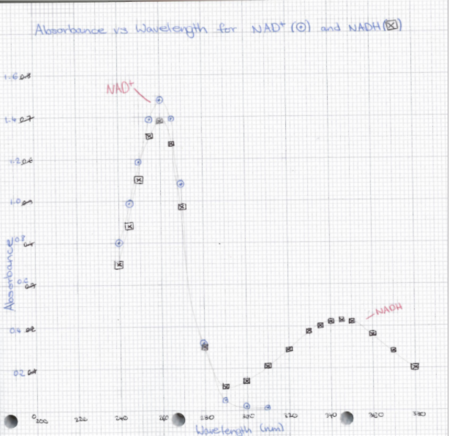
  • Spectrophotometry - all I remember about this is that trying to use the spectrophotometer involved lots of repetitive movements, and that we had to keep getting new versions of the alcohol dehydrogenase enzyme because our one never worked (not even for the supervisors). We had to use the Beer-Lambert law which was fine because we'd used it in chemistry the year before and it's simple, and plot absorbance graphs like this: 
imageedit_3_4894632287.png
  • Chromatography - we used two types of chromatography, gel filtration (size) and ion exchange (charge). The assignment for this had some nice reasoned but not too hard questions like:

 A gel filtration resin has the following technical specifications: it will exclude globular proteins with a molecular mass greater than 50,000, and will completely include globular proteins with a molecular mass less than 6,000. In what order will proteins with molecular weights of 70,000, 40,000, 4,500, and 20,000 be eluted from the column? Would this setup work for separating a mixture with proteins of weight 72,000, 90,000, 80,250 and 5000 into its component parts?

and I said that they will elute in decreasing order of weight, and that it wouldn't work for the second one because 'three of them (Proteins 5, 6, and 7) are above the top of the fractionation range and will just come out quickly and together with the mobile phase. Protein 8 is below the bottom of the range and would elute last because it can enter all of the beads. So this could work if you just wanted to isolate Protein 8 from the other three, but I don’t think it would work to separate Proteins 5, 6 and 7 from each other.' Not the hardest question, but it was nice in that it tested if you understood what the procedure did and what sort of experiments it'd be suitable for.
  • Enzyme Kinetics - this involved working with enzyme inhibitors and culminated in finding the Ki of the inhibitor by graphing the slopes of the Lineweaver-Burk plot against concentration againt inhibitor. It seemed intimidating but was cool once I got it done.


COMPUTER MARKED ASSIGNMENT & NUMERICAL SKILLS TUTORIAL

The numerical skills tutorial was very very easy and kind of disappointing in how easy it was, because I finished really quickly but the class moved through the maths really slowly. A lot of it was just working with orders of magnitude so being fluent with converting between nanomoles and millimoles for example, and also working with pH. It was like LC Chemistry or Physics. 

On the bright side the CMA which was just numerical questions was then really easy and I, along with a lot of other people I think, got 100% on it. 

This was the CMA, as opposed to the Demonstrator Marked Assignment. 

PROTEOMICS PROJECT

The Proteomics project was awesome and a really cool thing to have added to the course. It was a bioinformatics project/treasure hunt where we were given a gene in a text file (just an ATGCTATCGATAGCTAGGCTAGCT or whatever sequence) and had to work out what the gene was, compare it to similar ones, and find out its functions.

We started by finding an open reading frame and getting a program to work out what the amino acids were, so methionine-leucine etc, and do a bunch more stuff including working out what the gene was (I think it was a myosin muscle gene) and comparing it to the same gene from a different species I think using sequence alignment and matching identical/similar/dissimilar amino acids, and then some questions about what that meant and evolution of the gene and how its function might have changed, and then visualising the protein the gene codes for using protein modelling software. We used lots of different tools including BLAST and ClustalW. It was a really awesome project, exactly the sort of thing I like with having enough instructions but also having a treasure hunt style and getting to think for yourself a little. 

I did like it but I found the difficulty level odd; I found the first week, especially on the cytoskeleton (actin, intermediate filaments, microtubules) and trafficking of molecules between vesicles in the cell, very difficult. It was a LOT of information and work, because of the flipped classroom way it was taught. I loved the proteomics project, the practical assignments, and a lot of the lectures. Good module (until it was swamped by even better modules (I wrote that as molecules originally)!).